
Three years that change a trajectory.
A small public middle school where every student thinks critically every day, learns by solving real problems in their own community, and is known by name by the adults around them.
Small by design, built around three ideas
Since 2010, ECMS-Gardena has organized everything it does around a simple vision: critical thinking for every student, in every class, every day. Three commitments make that real.
A small learning community
About 120 students per grade, 360 in all. In 6th and 7th grade, two core teachers share the same students, so no one slips through unnoticed. Advisory meets three times a week to build belonging and work through what matters to students.
Learning by doing, with an environmental lens
Subjects connect. Each year ends in an interdisciplinary project where students research a real need in their own neighborhood, build a solution, and present it to community and city leaders. Field studies, the garden, and three overnight trips take learning outside.
Students do the thinking
Every class uses Reading Apprenticeship, a research-based approach where students read grade-level texts, make their thinking visible, talk it through with a partner, and write. The teacher facilitates. The students do the intellectual work.
What your child’s day actually feels like
Routines are consistent from room to room, so students know what to expect, and there is room every day to play, eat well, and be outside.
- Arrival on the turfStudents gather outside while music from a student-suggested playlist plays. Administrators and staff greet them by name. When the bell rings, teachers are at their doors with a fist bump, high five, or handshake.
- Advisory or first blockAdvisory meets three mornings a week with a core teacher who knows your child well: community circles, goal setting, problem solving, and appreciations. Other mornings open with a core class or G40, a protected intervention and enrichment block.
- Core blocksHumanities and STEM in 6th grade, longer blocks with fewer transitions. Every class starts with a Do Now, protected independent think time, then partner talk and whole-class discussion.
- Recess and nutritionA 15-minute break with a healthy snack, volleyball or soccer on the turf, the playground, cards in the garden, and the water-bottle filling station.
- Specialty class and lunchGreen Ambassadors, Handwork, Games and Movement, or College Readiness. Lunch is served in the MPR on compostable trays; students sort compost, recycling, and landfill before the turf opens for a pickup soccer game or board games.
- Science and mathHands-on experiments, simulations on Chromebooks, and math where the question is “tell me how you got your answer,” not just what it is.
- Dismissal, then clubs and tutoringStudents head home, to a club, to teacher tutoring, or to the Boys and Girls Club after-school program on campus. Mondays are early release at 1:00 PM for staff learning time.
See the full 2026-27 bell schedule.

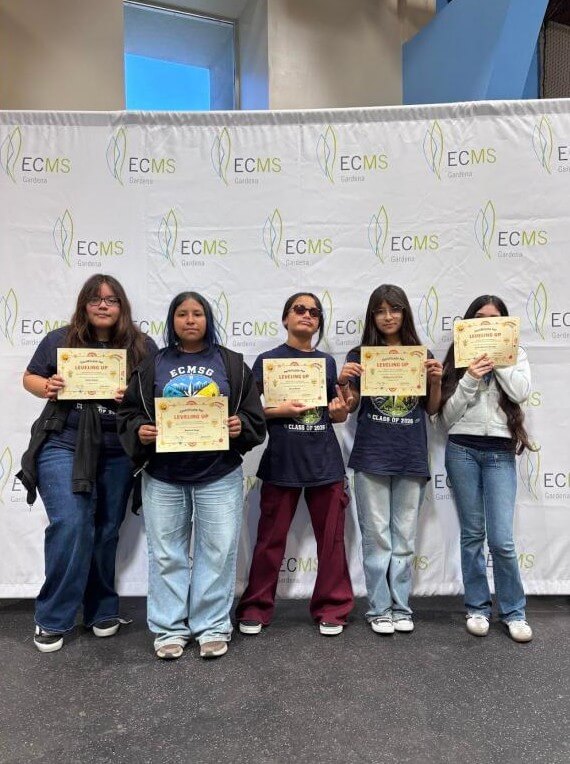
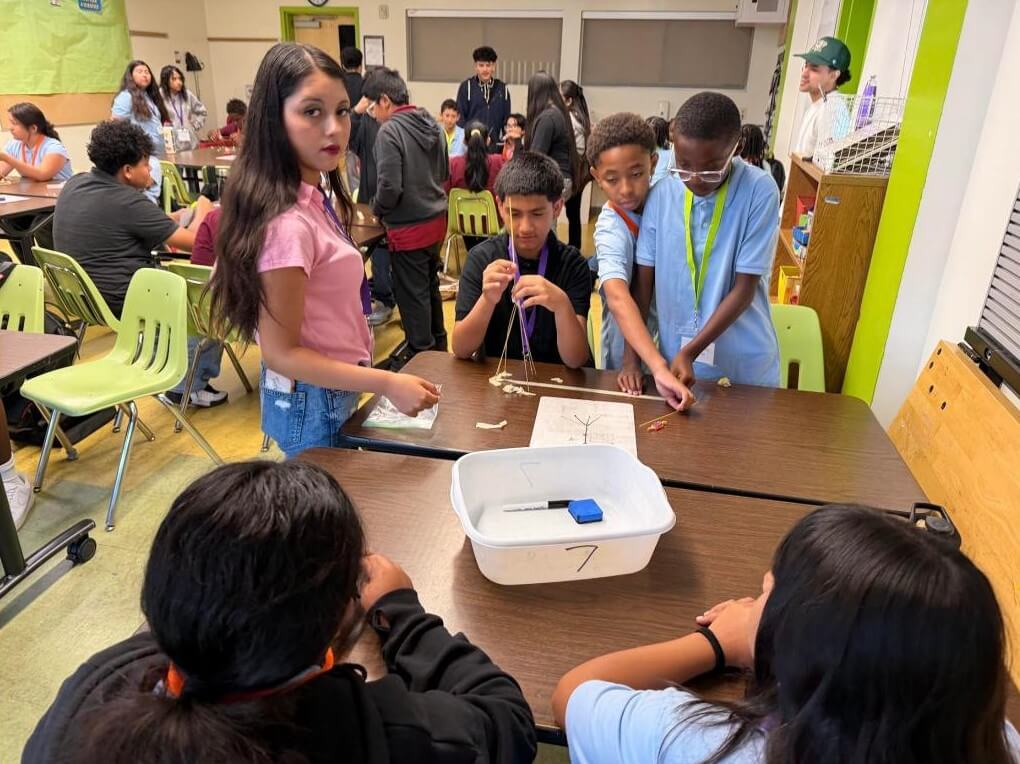
Rigorous, connected, and aligned to California standards
Most of our students arrive below grade level. Our job is to change that trajectory, and we do it with grade-level work for every student, strong daily routines, and targeted support twice a week.
Two teachers, two blocks
Humanities combines English and World History (Ancient Civilizations). STEM combines Math 6 and Science 6. Two core teachers share the same students, which eases the move from one elementary teacher to a full secondary schedule.
Same structure, deeper work
Humanities continues (Medieval and Early Modern World History with English), alongside Math 7 and Science 7. Projects are planned together across all three subjects by the 7th grade team.
Four teachers, ready for high school
English, U.S. History, Science 8, and Math 8 or Algebra as separate courses. History and science run in longer alternating blocks while English and math meet daily, so students practice both formats they will meet in high school.
English Language Arts
Reading Apprenticeship anchors literacy in every class. Students read whole novels and text sets that center authors of color and connect to history: titles have included The Lightning Thief in 6th, Trash Vortex in 7th, and Farewell to Manzanar and Summer of the Mariposas in 8th. Every student has Sustained Silent Reading, a daily period of reading they choose themselves. Writing is tied to each unit’s big idea: 6th graders write proposals for city officials, 7th graders compare the fall of Rome to the districts of The Hunger Games. Socratic seminars, literature circles, and public readings build speaking and listening.
History and Social Science
A three-year sequence: Ancient Civilizations in 6th, Medieval and Early Modern Times in 7th, and United States History from the founding through Industrialization in 8th. Students read primary sources, write document-based essays, and ask hard questions about who is left out of the standard story. In 7th grade an essential question runs through the year: in what ways do our daily choices, like what we eat or buy, shape the lives of others and the world we share?
Mathematics
Our goal is students who can solve problems they have not seen before. Math is problem-based and student-centered, built on the Illustrative Mathematics curriculum and the Standards for Mathematical Practice: make sense of problems, reason, build arguments, model with math. Teachers protect independent think time, then students explain their process to a partner and the class. Students who meet the 7th grade criteria take Algebra in 8th grade, with bridge pathways to help more students get there.
Science
Hands-on and aligned to the Next Generation Science Standards, integrating life, earth, and physical science each year. 6th graders study cells, genetics, and body systems. 7th graders spend a semester in chemistry (including designing their own flameless heaters), then move to ecosystems and plate tectonics. 8th graders investigate forces, sound waves, climate hazards, and space science. In 2026-27 we are adopting the SEPUP science curriculum to deepen coherence and rigor.
G40: built-in support
Twice a week, every student has a protected 40-minute block. One day is math, one is reading. Students either stay with their teacher for targeted small-group practice or get focused support in a small group, using the same texts and content from class. No one is pulled away from grade-level learning to get help.
English learners
Every core class teaches and assesses an English Language Development standard each quarter. Designated ELD is anchored in the grade-level texts students are already reading in class, led by our ELD Coordinator and a cross-trained team of paraeducators.
Interdisciplinary by design
Grade-level teams share planning time every week and a planning day every quarter. Units are backward-designed from what students should understand and be able to do, and teachers score student work together so expectations are consistent from room to room.
Four classes every student takes
Specialty classes develop skills core classes cannot, give students a way in to academic content, and help them find what they care about.
Green Ambassadors
Our signature course. Students study real environmental problems and solutions: human impact on land and oceans, local ecosystems, waste, water, and food systems. They garden, compost, harvest, and go out into the community monthly, and they take part in quarterly Saturday service days. The course combines environmental science with social studies and English so students can read about an issue, understand the policies behind it, measure it with data, and persuade others to act.
Handwork (Visual Art)
A year-long art, craft, and design course that builds fine motor skills and connects to each grade’s themes of identity and community. Fall and spring open with Foundations of Art, often self-portraiture and the elements of art. Winter and late spring turn to Art Builds Community: sculpture, hand sewing, textile work, and collaborative murals.
Games and Movement
Physical education with health and social-emotional learning woven in. Students lead warm-ups, learn team sports, dance, and fitness, and set personal goals. 6th graders study the heart and healthy habits, 7th graders focus on FitnessGram goals and the muscular and skeletal systems, and comprehensive health education runs through 7th and 8th grade in line with the California Healthy Youth Act.
College and Career Readiness
Inspired by AVID, this course teaches the skills behind school success that are rarely taught directly: organization, time management, note-taking, study habits, and leadership. Students explore careers that match their interests, meet college students and alumni, visit local colleges, and complete projects they share with the school community.
Every year ends in a real problem, solved in public
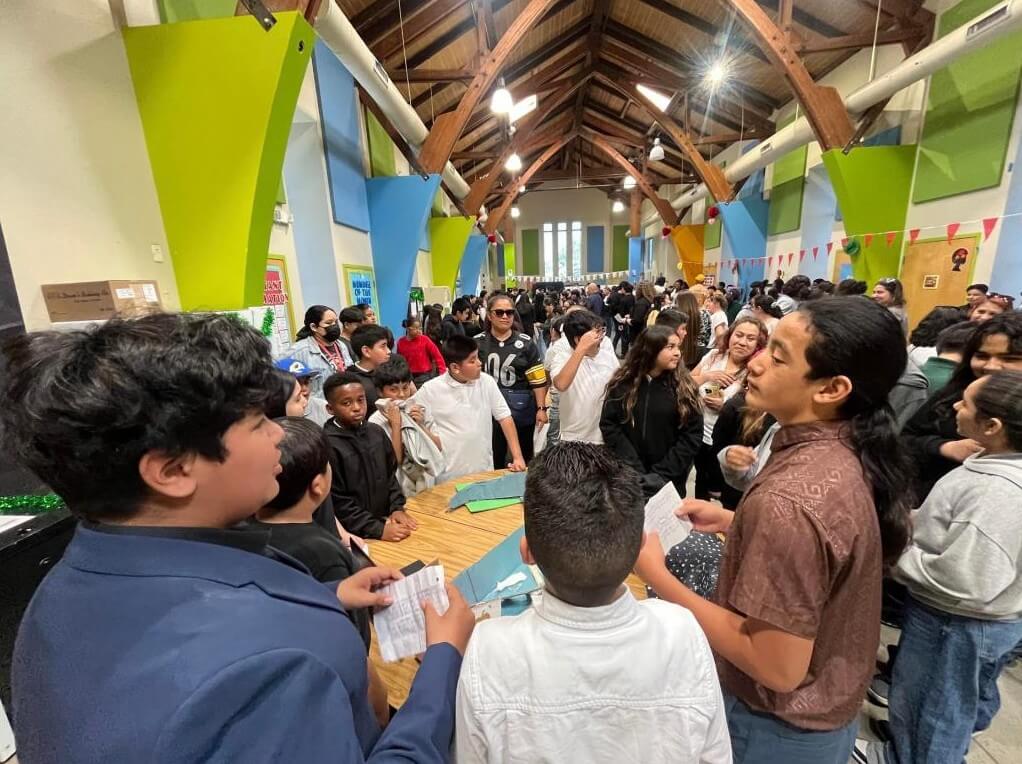
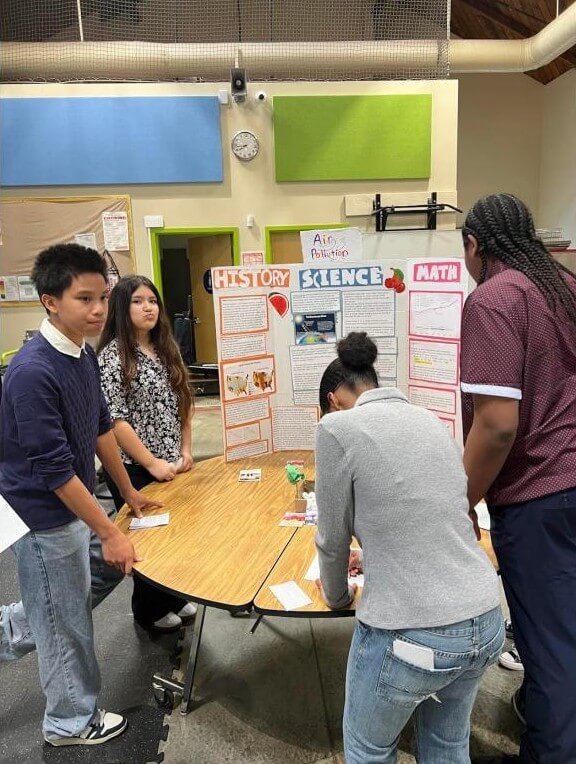
The Interdisciplinary Benchmark, or IBM, is the project that ties each year together. Students work in teams over several weeks, then present to families, school leaders, and city officials at a public symposium.
Community activists
Students walk the neighborhood to observe needs through an environmental justice lens, interview the mayor and city officials at an on-campus symposium, research an issue such as food access, homelessness, or neighborhood safety, calculate real costs, build a working prototype, and pitch their plan to school and city leaders. History, science, English, and math become one project.
Plastic and our ocean
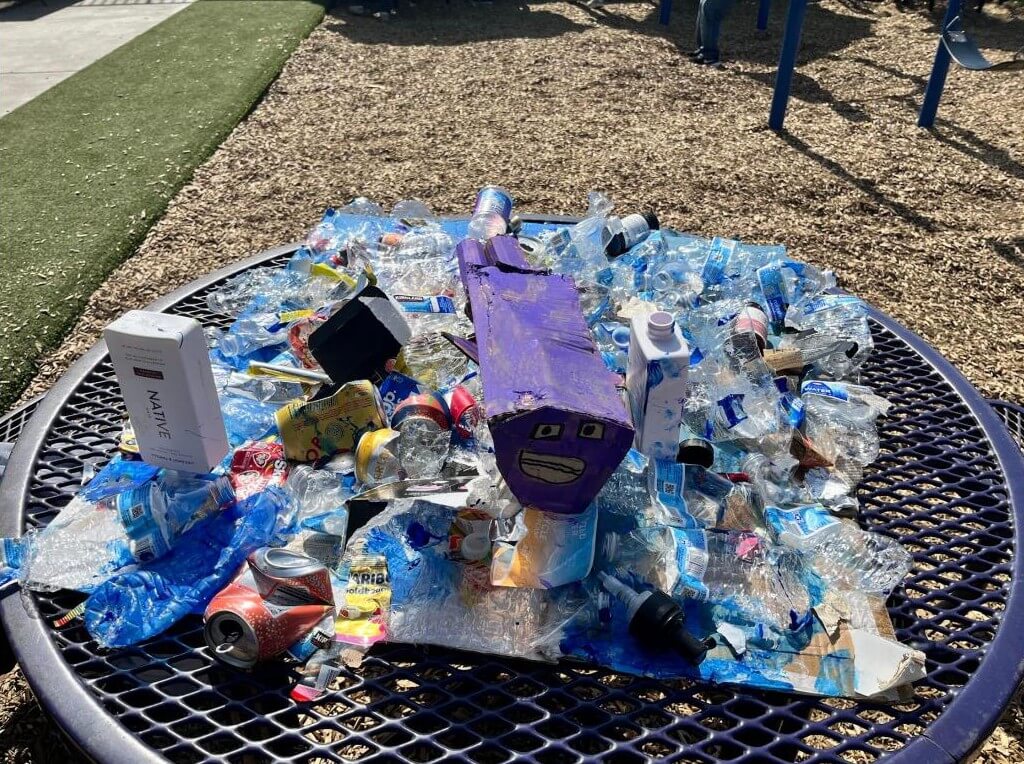
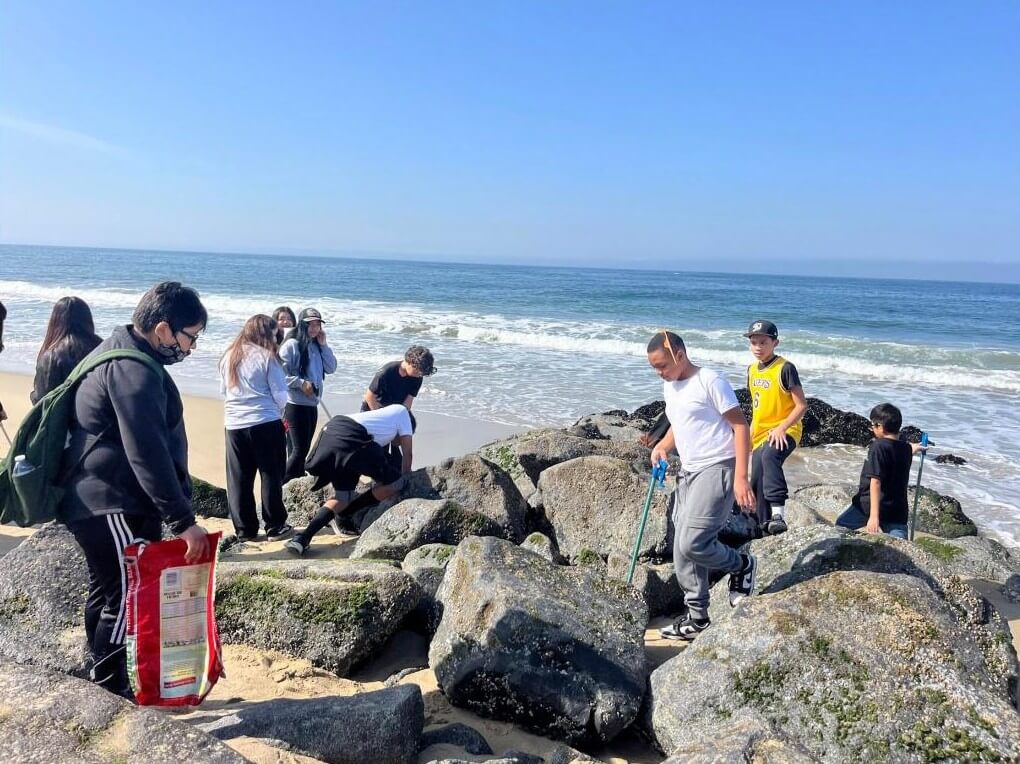
Students investigate how plastic pollution affects beaches, oceans, and the organisms that live there. The unit includes a field trip to a local wetlands ecosystem and culminates in a beach cleanup and a student art exhibition that turns collected plastic into pieces that raise awareness.
Climate and community
Students examine natural hazards such as drought and flood, analyze climate data, and design sustainable solutions for their community. The project ends in a public showcase of three-dimensional community models and research findings.

Three overnight trips, one for each year
For many of our students the 6th grade trip is their first night away from family and their first time in the mountains. Each trip builds on the last, from independence and belonging in 6th grade to hands-on science in 7th to leadership in 8th. Trips are staffed by our own teachers and offered at no cost to families.
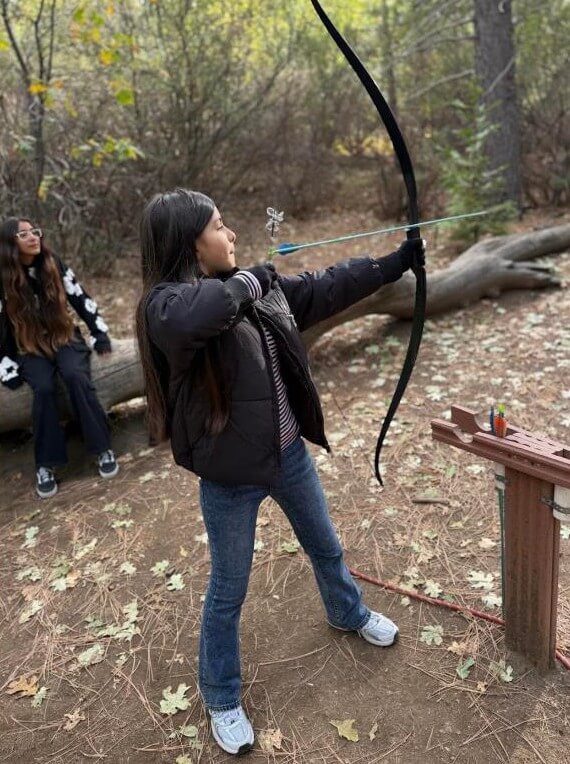
First night away
A cabin-based introduction to the outdoors: ropes course, archery, and shared experiences that build independence and community.
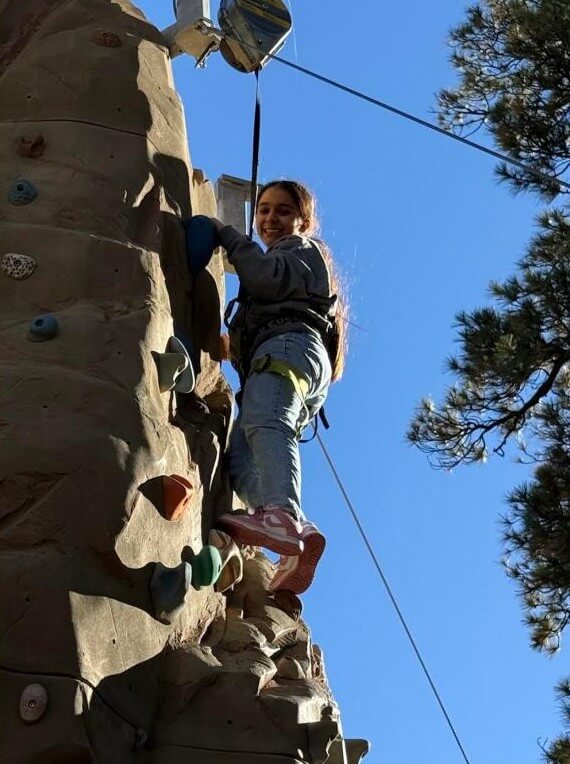
Science in the wild
Builds on the 6th grade community while adding hands-on outdoor learning tied to the science standards.
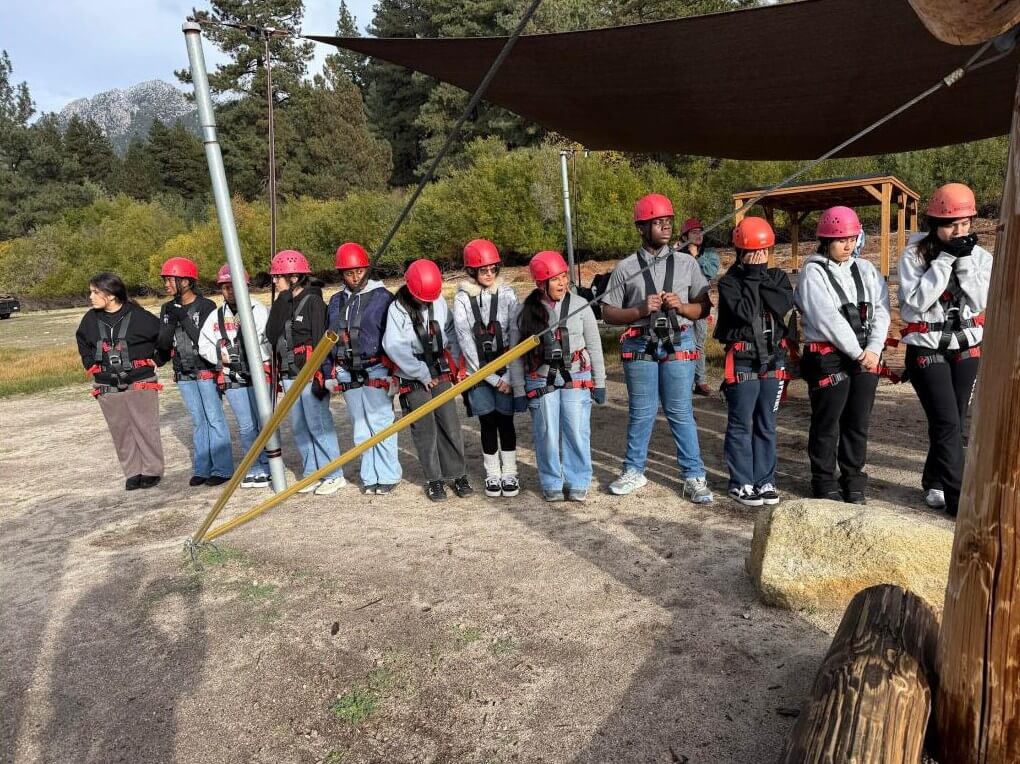
Leading the way
The final trip together as middle schoolers, designed to strengthen each student’s sense of self and leadership before high school.
Clubs, tutoring, after school, and summer
Clubs
Seven clubs this semester: Students Run LA running club, Black Student Union, Social Justice Club, Engineering Club (MESA), Anime Club, Chess Club, and Yearbook Club. Most meet after school; two meet at lunch.
Tutoring
Core teachers hold tutoring after school and at lunch every week, by grade and subject, so help comes from the teacher who knows the work. Green Ambassadors, Handwork, and College Readiness teachers hold hours too.
After-school program
Our free After School Education and Safety program runs on campus with the Boys and Girls Club: daily homework help, fitness, a healthy snack, and enrichment cycles in arts and media, wellness, and STEM.
Summer
Camp ECMS is a free four-week July program that builds confidence and academic skills in reading, math, and science through hands-on learning. Summer Bridge welcomes incoming 6th graders and their families before the year begins.
This week at a glance: tutoring and clubs, Semester 1
Updated November 4, 2026. Some teachers hold tutoring every week and others every other week, so check with the teacher before a first visit. If no room is listed, ask the teacher where to go.
Monday
Early release, out at 1:00
Nothing on this day for these filters.
Tuesday
Regular day, out at 3:15
Nothing on this day for these filters.
Wednesday
Regular day, out at 3:15
Nothing on this day for these filters.
Thursday
Regular day, out at 3:15
Nothing on this day for these filters.
Friday
Regular day, out at 3:15
Nothing on this day for these filters.
Full clubs and tutoring page, with filters by grade and subject
Known, safe, and supported
Attendance and behavior are not isolated problems. They are signs of whether a student feels known, safe, and connected. So we invest in belonging first, and we have a team ready when a student needs more.
A wellness team on campus
A full-time counselor, social worker, and Dean of Student Culture, supported by graduate social work interns from local universities. Individual and family counseling is available on site, and the counseling team is in the lunch area every day.
Restorative, not punitive
Five Community Agreements guide every classroom: attentive listening, appreciations with no put-downs, the right to pass and to participate, mutual respect, and mindfulness. Conflicts are worked through with community circles, peer mediation, and restorative conversations. DeansList records what students do well far more often than what goes wrong.
Inclusion for students with IEPs
Education specialists co-teach in general education classrooms alongside paraeducators cross-trained in special education and English language development. Services range from in-class support to speech and occupational therapy, in partnership with the El Dorado Charter SELPA.
Belonging programs
EmpowHER and The League offer gender-responsive mentoring, The Alliance provides a safe space for LGBTQ students, and the Black Student Union helps Black students feel connected and seen.
Early help, not late
Teachers meet weekly about students, and a Student Success Team brings family, teachers, and administrators together when a child needs a plan. An attendance tracking system flags concerns early so we can reach out before small problems grow.
Families as partners
Student-led conferences twice a year, monthly Coffee with the Principal on Zoom and in person, PowerSchool and weekly DeansList reports, the weekly Eagle Bulletin in English and Spanish, and interpretation whenever you ask.
A school rooted in its community
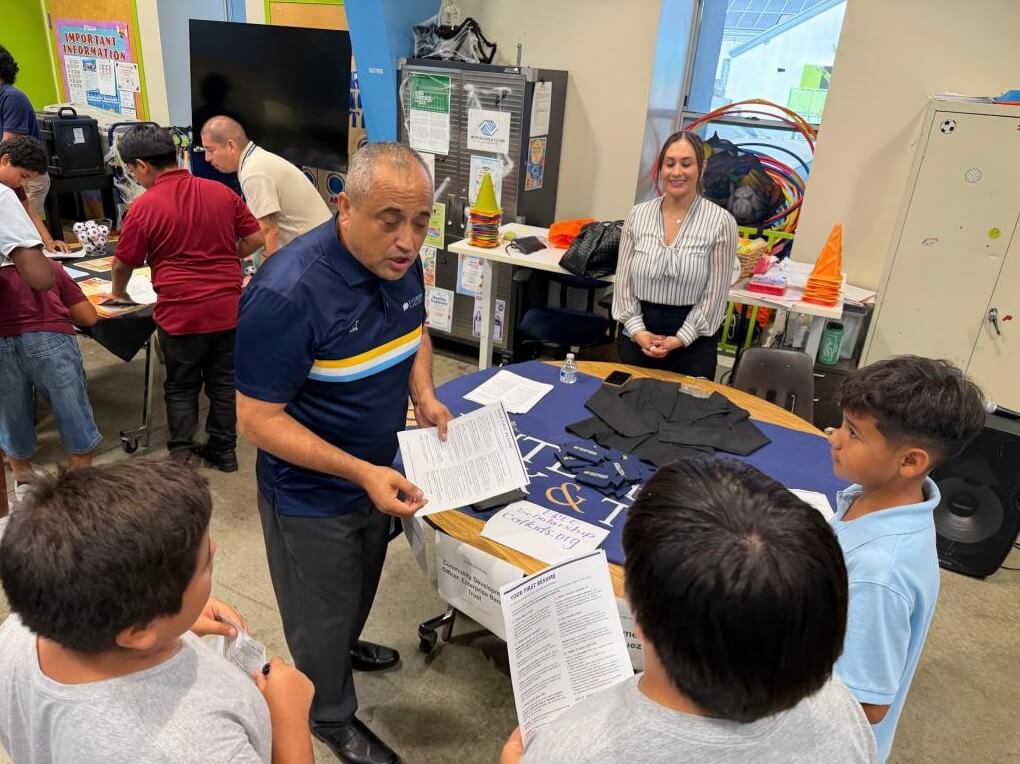
Our neighborhood sits where Gardena, Los Angeles, and Carson meet. We build partnerships that keep students safe, open doors, and bring expertise onto campus. Elected officials from both cities speak at our events and sit on panels for student projects. Each spring we host Earth Day with the City of Gardena at the park by the Gardena Willows.
Environment and community
- Gardena Willows Wetland Preserve
- City of Gardena
- Generation Earth
- Moonwater Farm
- The Bay Foundation
- California Fish and Wildlife
- Harbor Gateway North Neighborhood Council
- Neighboring elementary schools
Student wellness
- USC
- Cal State Long Beach
- Cal State Dominguez Hills
- Loyola Marymount University
- Masada Homes
- Children’s Health Institute
Belonging and leadership
- Boys and Girls Club
- EmpowHER Institute
- The League
- The Alliance
- Students Run LA
- MESA
Learning and outdoor education
- Reading Apprenticeship (WestEd)
- Pali Institute
- Camp Woodcraft
- AstroCamp
- El Dorado Charter SELPA

See it for yourself
The best way to understand ECMS-Gardena is to walk the campus during the school day. Tours and family information sessions run monthly, in English and Spanish, and applications for 2027-28 are open now.
Tres años que cambian una trayectoria.
Una escuela secundaria pública y pequeña donde cada estudiante piensa de manera crítica todos los días, aprende resolviendo problemas reales de su propia comunidad y es conocido por su nombre por los adultos que lo rodean.
Pequeña a propósito, construida sobre tres ideas
Desde 2010, ECMS-Gardena organiza todo lo que hace alrededor de una visión sencilla: pensamiento crítico para cada estudiante, en cada clase, todos los días. Tres compromisos lo hacen realidad.
Una comunidad de aprendizaje pequeña
Unos 120 estudiantes por grado, 360 en total. En 6º y 7º grado, dos maestros principales comparten a los mismos estudiantes, así nadie pasa desapercibido. El grupo de Advisory se reúne tres veces por semana para crear un sentido de pertenencia y hablar de lo que les importa a los estudiantes.
Aprender haciendo, con un enfoque ambiental
Las materias se conectan. Cada año termina con un proyecto interdisciplinario en el que los estudiantes investigan una necesidad real de su propio vecindario, construyen una solución y la presentan a líderes de la comunidad y de la ciudad. Los estudios de campo, el huerto y tres viajes con estancia de noche llevan el aprendizaje afuera.
Los estudiantes son quienes piensan
Cada clase usa Reading Apprenticeship, un método basado en investigación en el que los estudiantes leen textos de su grado, hacen visible su pensamiento, lo comentan con un compañero y escriben. El maestro guía. Los estudiantes hacen el trabajo intelectual.
Cómo es realmente el día de su hijo
Las rutinas son iguales de un salón a otro, así los estudiantes saben qué esperar, y cada día hay tiempo para jugar, comer bien y estar al aire libre.
- Llegada a la cancha de pastoLos estudiantes se reúnen afuera mientras suena música de una lista sugerida por ellos mismos. Los administradores y el personal los saludan por su nombre. Cuando suena la campana, los maestros esperan en la puerta con un saludo de puño, un choque de manos o un apretón de manos.
- Advisory o primer bloqueAdvisory se reúne tres mañanas por semana con un maestro principal que conoce bien a su hijo: círculos comunitarios, metas, resolución de problemas y reconocimientos. Las otras mañanas empiezan con una clase principal o con G40, un bloque protegido de intervención y enriquecimiento.
- Bloques principalesHumanidades y STEM en 6º grado, bloques más largos con menos cambios de salón. Cada clase empieza con un Do Now, tiempo protegido para pensar de forma independiente, y después conversación en pareja y discusión con toda la clase.
- Recreo y refrigerioUn descanso de 15 minutos con un refrigerio saludable, voleibol o fútbol en la cancha, el patio de juegos, cartas en el huerto y la estación para llenar botellas de agua.
- Clase especial y almuerzoGreen Ambassadors, Handwork, Games and Movement o College Readiness. El almuerzo se sirve en el MPR en charolas compostables; los estudiantes separan composta, reciclaje y basura antes de que se abra la cancha para un partido de fútbol o juegos de mesa.
- Ciencias y matemáticasExperimentos prácticos, simulaciones en Chromebooks y matemáticas donde la pregunta es “explícame cómo llegaste a tu respuesta”, no solo cuál es.
- Salida, y después clubes y tutoríasLos estudiantes se van a casa, a un club, a la tutoría con un maestro o al programa después de clases del Boys and Girls Club en la escuela. Los lunes la salida es temprano, a la 1:00 PM, por la capacitación del personal.
Vea el horario de campana 2026-27 completo.
Exigentes, conectadas y alineadas con los estándares de California
La mayoría de nuestros estudiantes llegan por debajo del nivel de su grado. Nuestro trabajo es cambiar esa trayectoria, y lo hacemos con trabajo de nivel de grado para cada estudiante, rutinas diarias sólidas y apoyo enfocado dos veces por semana.
Dos maestros, dos bloques
Humanidades combina Inglés e Historia Universal (Civilizaciones Antiguas). STEM combina Matemáticas 6 y Ciencias 6. Dos maestros principales comparten a los mismos estudiantes, lo que facilita el paso de un solo maestro de primaria a un horario completo de secundaria.
La misma estructura, trabajo más profundo
Humanidades continúa (Historia Universal Medieval y Moderna Temprana con Inglés), junto con Matemáticas 7 y Ciencias 7. El equipo de 7º grado planea los proyectos en conjunto para las tres materias.
Cuatro maestros, listos para la preparatoria
Inglés, Historia de Estados Unidos, Ciencias 8 y Matemáticas 8 o Álgebra como cursos separados. Historia y ciencias se dan en bloques largos que se alternan, mientras que inglés y matemáticas son diarias, así los estudiantes practican los dos formatos que encontrarán en la preparatoria.
Lengua y Literatura en Inglés
Reading Apprenticeship es la base de la lectura en cada clase. Los estudiantes leen novelas completas y conjuntos de textos que destacan a autores de color y se conectan con la historia: entre los títulos han estado The Lightning Thief en 6º, Trash Vortex en 7º, y Farewell to Manzanar y Summer of the Mariposas en 8º. Cada estudiante tiene Lectura Silenciosa Sostenida, un periodo diario de lectura que elige él mismo. La escritura se conecta con la idea central de cada unidad: los de 6º escriben propuestas para funcionarios de la ciudad, los de 7º comparan la caída de Roma con los distritos de Los Juegos del Hambre. Los seminarios socráticos, los círculos literarios y las lecturas públicas desarrollan la expresión oral y la escucha.
Historia y Ciencias Sociales
Una secuencia de tres años: Civilizaciones Antiguas en 6º, Época Medieval y Moderna Temprana en 7º, e Historia de Estados Unidos desde la fundación hasta la Industrialización en 8º. Los estudiantes leen fuentes primarias, escriben ensayos basados en documentos y se hacen preguntas difíciles sobre quién queda fuera de la historia tradicional. En 7º grado una pregunta esencial recorre todo el año: ¿de qué manera nuestras decisiones diarias, como lo que comemos o compramos, afectan la vida de otros y el mundo que compartimos?
Matemáticas
Nuestra meta son estudiantes capaces de resolver problemas que no han visto antes. Las matemáticas se basan en problemas y se centran en el estudiante, con el currículo Illustrative Mathematics y las Prácticas Matemáticas: entender el problema, razonar, construir argumentos, modelar con matemáticas. Los maestros protegen el tiempo para pensar de forma independiente, y después los estudiantes explican su proceso a un compañero y a la clase. Los estudiantes que cumplen los criterios de 7º grado toman Álgebra en 8º, con cursos puente para que más estudiantes lleguen ahí.
Ciencias
Prácticas y alineadas con los Estándares de Ciencias de la Nueva Generación, integrando cada año ciencias de la vida, de la Tierra y físicas. En 6º se estudian las células, la genética y los sistemas del cuerpo. En 7º se dedica un semestre a la química (incluido el diseño de sus propios calentadores sin flama), y después se pasa a los ecosistemas y la tectónica de placas. En 8º se investigan las fuerzas, las ondas de sonido, los riesgos climáticos y la ciencia del espacio. En 2026-27 estamos adoptando el currículo de ciencias SEPUP para dar más coherencia y rigor.
G40: apoyo integrado
Dos veces por semana, cada estudiante tiene un bloque protegido de 40 minutos. Un día es de matemáticas y otro de lectura. Los estudiantes se quedan con su maestro para práctica enfocada en grupos pequeños o reciben apoyo en un grupo pequeño, con los mismos textos y contenidos de la clase. A nadie se le saca del aprendizaje de nivel de grado para recibir ayuda.
Estudiantes de inglés
Cada clase principal enseña y evalúa un estándar de Desarrollo del Idioma Inglés cada trimestre. El ELD designado se basa en los textos de nivel de grado que los estudiantes ya leen en clase, con la guía de nuestra Coordinadora de ELD y un equipo de paraeducadores con capacitación cruzada.
Interdisciplinario por diseño
Los equipos de cada grado comparten tiempo de planeación cada semana y un día de planeación cada trimestre. Las unidades se diseñan a partir de lo que los estudiantes deben entender y saber hacer, y los maestros califican el trabajo de los estudiantes en conjunto para que las expectativas sean iguales de un salón a otro.
Cuatro clases que toma cada estudiante
Las clases especiales desarrollan habilidades que las materias principales no pueden, dan a los estudiantes otra puerta de entrada al contenido académico y los ayudan a descubrir lo que les importa.
Green Ambassadors
Nuestro curso distintivo. Los estudiantes estudian problemas ambientales reales y sus soluciones: el impacto humano en la tierra y los océanos, los ecosistemas locales, los residuos, el agua y los sistemas de alimentos. Cultivan el huerto, hacen composta, cosechan y salen a la comunidad cada mes, y participan en días de servicio los sábados cada trimestre. El curso combina ciencias ambientales con estudios sociales e inglés para que los estudiantes puedan leer sobre un problema, entender las políticas detrás de él, medirlo con datos y convencer a otros de actuar.
Handwork (Artes Visuales)
Un curso de arte, oficios y diseño de todo el año que desarrolla la motricidad fina y se conecta con los temas de identidad y comunidad de cada grado. El otoño y la primavera empiezan con Fundamentos del Arte, muchas veces con autorretratos y los elementos del arte. El invierno y el final de la primavera pasan a El Arte Construye Comunidad: escultura, costura a mano, textiles y murales en equipo.
Games and Movement
Educación física con salud y aprendizaje socioemocional integrados. Los estudiantes dirigen los calentamientos, aprenden deportes de equipo, baile y acondicionamiento físico, y se ponen metas personales. En 6º se estudia el corazón y los hábitos saludables, en 7º las metas de FitnessGram y los sistemas muscular y esquelético, y la educación integral en salud se imparte en 7º y 8º conforme a la Ley de Juventud Saludable de California.
College and Career Readiness
Inspirado en AVID, este curso enseña las habilidades detrás del éxito escolar que rara vez se enseñan directamente: organización, manejo del tiempo, toma de apuntes, hábitos de estudio y liderazgo. Los estudiantes exploran carreras que van con sus intereses, conocen a estudiantes universitarios y exalumnos, visitan universidades locales y completan proyectos que comparten con la comunidad escolar.
Cada año termina con un problema real, resuelto en público
El Proyecto Interdisciplinario, o IBM, es el proyecto que une cada año. Los estudiantes trabajan en equipos durante varias semanas y después presentan a las familias, los líderes de la escuela y funcionarios de la ciudad en un simposio público.
Activistas de la comunidad
Los estudiantes recorren el vecindario para observar necesidades desde la justicia ambiental, entrevistan al alcalde y a funcionarios de la ciudad en un simposio en la escuela, investigan un tema como el acceso a alimentos, la falta de vivienda o la seguridad del vecindario, calculan costos reales, construyen un prototipo que funciona y presentan su plan a líderes de la escuela y la ciudad. Historia, ciencias, inglés y matemáticas se vuelven un solo proyecto.
El plástico y nuestro océano
Los estudiantes investigan cómo la contaminación por plástico afecta las playas, los océanos y los organismos que viven ahí. La unidad incluye una excursión a un humedal local y termina con una limpieza de playa y una exposición de arte estudiantil que convierte el plástico recolectado en piezas que crean conciencia.
Clima y comunidad
Los estudiantes examinan riesgos naturales como la sequía y las inundaciones, analizan datos del clima y diseñan soluciones sostenibles para su comunidad. El proyecto termina con una muestra pública de maquetas tridimensionales de la comunidad y resultados de investigación.
Tres viajes con estancia de noche, uno por cada año
Para muchos de nuestros estudiantes, el viaje de 6º grado es su primera noche lejos de la familia y su primera vez en las montañas. Cada viaje se construye sobre el anterior: independencia y pertenencia en 6º, ciencia práctica en 7º y liderazgo en 8º. Los viajes los acompañan nuestros propios maestros y no tienen costo para las familias.
La primera noche fuera
Una introducción al aire libre en cabañas: curso de cuerdas, tiro con arco y experiencias compartidas que construyen independencia y comunidad.
Ciencia en la naturaleza
Se construye sobre la comunidad de 6º grado y agrega aprendizaje práctico al aire libre ligado a los estándares de ciencias.
Abriendo camino
El último viaje juntos como estudiantes de secundaria, diseñado para fortalecer la identidad y el liderazgo de cada estudiante antes de la preparatoria.
Clubes, tutorías, programa después de clases y verano
Clubes
Siete clubes este semestre: el club de corredores Students Run LA, Black Student Union, Club de Justicia Social, Club de Ingeniería (MESA), Club de Anime, Club de Ajedrez y Club del Anuario. La mayoría se reúne después de clases; dos se reúnen en el almuerzo.
Tutorías
Los maestros principales dan tutorías después de clases y en el almuerzo cada semana, por grado y materia, para que la ayuda venga del maestro que conoce el trabajo. Los maestros de Green Ambassadors, Handwork y College Readiness también tienen horas de apoyo.
Programa después de clases
Nuestro programa gratuito After School Education and Safety funciona en la escuela con el Boys and Girls Club: ayuda diaria con la tarea, actividad física, un refrigerio saludable y ciclos de enriquecimiento en artes y medios, bienestar y STEM.
Verano
Camp ECMS es un programa gratuito de cuatro semanas en julio que fortalece la confianza y las habilidades académicas en lectura, matemáticas y ciencias con aprendizaje práctico. Summer Bridge recibe a los nuevos estudiantes de 6º grado y a sus familias antes de que empiece el año.
La semana de un vistazo: tutorías y clubes, Semestre 1
Actualizado el 4 de noviembre de 2026. Algunos maestros dan tutoría cada semana y otros cada dos semanas, así que confirme con el maestro antes de la primera visita. Si no aparece el salón, pregunte al maestro a dónde ir.
Lunes
Salida temprano, a la 1:00
Nada este día con estos filtros.
Martes
Día regular, salida a las 3:15
Nada este día con estos filtros.
Miércoles
Día regular, salida a las 3:15
Nada este día con estos filtros.
Jueves
Día regular, salida a las 3:15
Nada este día con estos filtros.
Viernes
Día regular, salida a las 3:15
Nada este día con estos filtros.
Página completa de clubes y tutorías, con filtros por grado y materia
Conocidos, seguros y apoyados
La asistencia y la conducta no son problemas aislados. Son señales de si un estudiante se siente conocido, seguro y conectado. Por eso invertimos primero en la pertenencia, y tenemos un equipo listo cuando un estudiante necesita más.
Un equipo de bienestar en la escuela
Una consejera, una trabajadora social y un Decano de Cultura Estudiantil de tiempo completo, con el apoyo de practicantes de maestría en trabajo social de universidades locales. Hay consejería individual y familiar en la escuela, y el equipo de consejería está en el área de almuerzo todos los días.
Restaurativo, no punitivo
Cinco Acuerdos Comunitarios guían cada salón: escuchar con atención, reconocimientos sin burlas, el derecho a pasar y a participar, respeto mutuo y atención plena. Los conflictos se resuelven con círculos comunitarios, mediación entre compañeros y conversaciones restaurativas. DeansList registra lo que los estudiantes hacen bien con mucha más frecuencia que lo que sale mal.
Inclusión para estudiantes con IEP
Los especialistas en educación enseñan junto con los maestros en los salones de educación general, con paraeducadores capacitados en educación especial y en desarrollo del idioma inglés. Los servicios van desde apoyo en el salón hasta terapia de lenguaje y terapia ocupacional, en colaboración con El Dorado Charter SELPA.
Programas de pertenencia
EmpowHER y The League ofrecen mentoría con enfoque de género, The Alliance ofrece un espacio seguro para estudiantes LGBTQ, y el Black Student Union ayuda a los estudiantes afroamericanos a sentirse conectados y vistos.
Ayuda a tiempo
Los maestros se reúnen cada semana para hablar de los estudiantes, y un Equipo de Éxito Estudiantil reúne a la familia, los maestros y los administradores cuando un niño necesita un plan. Un sistema de seguimiento de asistencia detecta las señales a tiempo para que podamos comunicarnos antes de que un problema pequeño crezca.
Las familias como aliadas
Conferencias dirigidas por el estudiante dos veces al año, Café con el Director cada mes por Zoom y en persona, PowerSchool y reportes semanales de DeansList, el Eagle Bulletin semanal en inglés y español, e interpretación siempre que la pida.
Una escuela con raíces en su comunidad
Nuestro vecindario está donde se juntan Gardena, Los Ángeles y Carson. Construimos alianzas que mantienen seguros a los estudiantes, abren puertas y traen conocimiento a la escuela. Funcionarios electos de las dos ciudades hablan en nuestros eventos y participan en los paneles de los proyectos estudiantiles. Cada primavera organizamos el Día de la Tierra con la Ciudad de Gardena en el parque junto a Gardena Willows.
Medio ambiente y comunidad
- Gardena Willows Wetland Preserve
- Ciudad de Gardena
- Generation Earth
- Moonwater Farm
- The Bay Foundation
- California Fish and Wildlife
- Harbor Gateway North Neighborhood Council
- Primarias vecinas
Bienestar estudiantil
- USC
- Cal State Long Beach
- Cal State Dominguez Hills
- Loyola Marymount University
- Masada Homes
- Children’s Health Institute
Pertenencia y liderazgo
- Boys and Girls Club
- EmpowHER Institute
- The League
- The Alliance
- Students Run LA
- MESA
Aprendizaje y educación al aire libre
- Reading Apprenticeship (WestEd)
- Pali Institute
- Camp Woodcraft
- AstroCamp
- El Dorado Charter SELPA
Véalo con sus propios ojos
La mejor manera de conocer ECMS-Gardena es recorrer la escuela durante el día escolar. Hay recorridos y sesiones informativas para familias cada mes, en inglés y español, y las solicitudes para 2027-28 ya están abiertas.